Introduction: Why Lifting “More” Isn’t Just About Ego
If you’ve been working out for months but stopped seeing progress, chances are your body has adapted.
This is where the science of progressive overload – the gradual increase in training stress – becomes the difference between stagnation and transformation.
Progressive overload isn’t about ego lifting; it’s about structured, science-based adaptation. Your body is designed to respond to small, consistent challenges. When you push slightly beyond what it’s used to, it adapts – growing stronger, leaner, and more resilient.
What Is Progressive Overload?
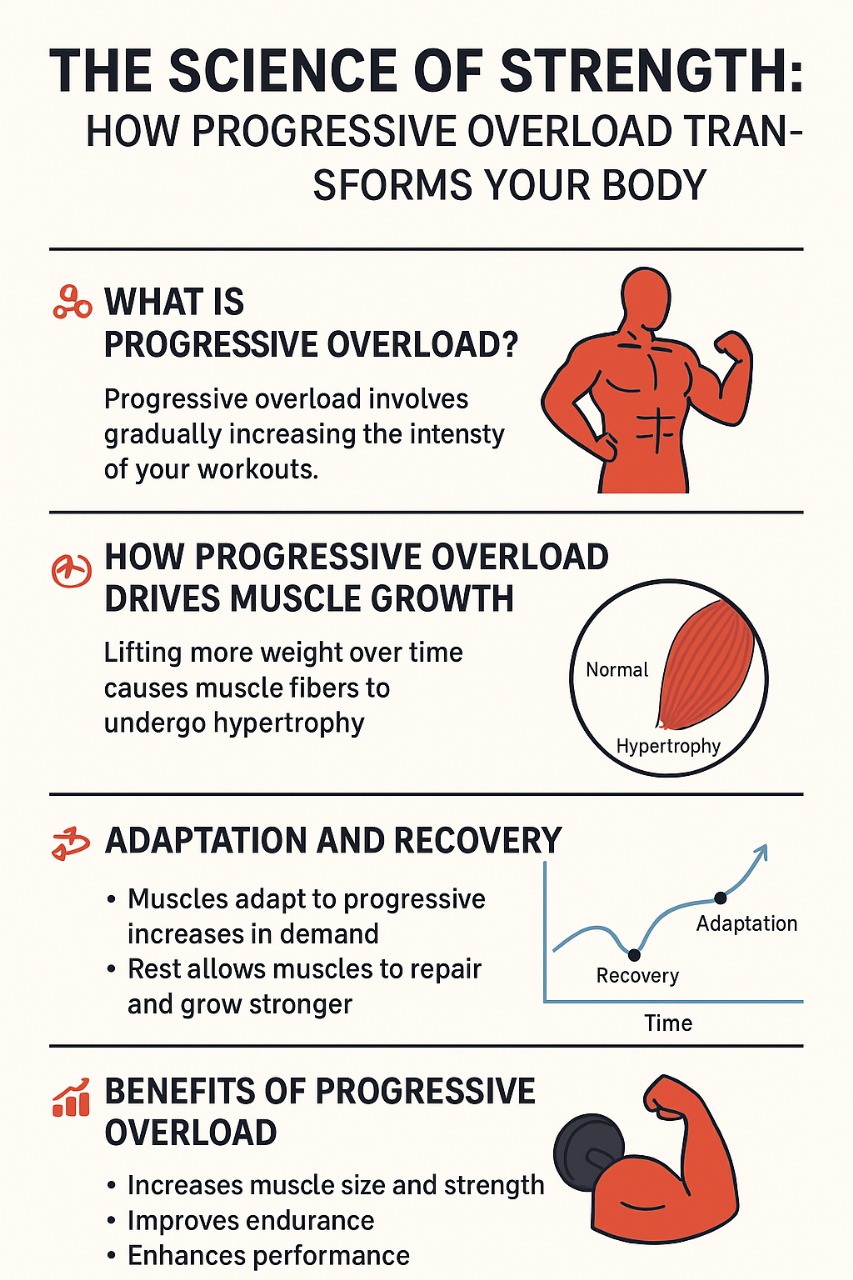
Progressive overload is the gradual increase of stress placed on the body during exercise training.
Coined by physiologist Dr. Thomas Delorme in the 1940s, it was originally developed to rehabilitate soldiers recovering from World War II injuries. His research showed that gradually increasing resistance led to faster strength recovery and muscle growth compared to static training loads.
In essence, it’s the physiological equivalent of “levelling up” – your muscles, bones, and nervous system adapt only when faced with incremental increases in demand.
The Science Behind Progressive Overload and Muscle Growth
When you lift weights, you cause micro-tears in your muscle fibres. Your body repairs these fibres through muscle protein synthesis (MPS), resulting in thicker and stronger muscle fibres — a process known as hypertrophy.
However, if the training load remains constant, the stimulus becomes insufficient.
According to a 2019 review in the European Journal of Applied Physiology, continuous progression in resistance or volume is essential to maintain muscle growth because the body adapts to stress remarkably fast.
The Key Mechanisms of Muscle Growth through Overload:
1. Mechanical Tension – Force generated by lifting heavier weights or performing explosive movements.
2. Muscle Damage – Microscopic fibre tears that trigger repair and growth.
3. Metabolic Stress – The “burn” feeling from high-rep training, leading to cell swelling and hormonal responses that promote growth.Progressive overload targets all three mechanisms – making it the most effective long-term strategy for muscle hypertrophy.
Forms of Progressive Overload: More Than Just Heavier Weights
Most people think progressive overload means lifting heavier, but that’s only one method. Thescience supports multiple overload pathways, including:
ater restrictions, has taught us the importance of embracing drought-tolerant plants in our landscaping designs. We’re excited to explore some hidden gems in the drought-resistant plant world.
| Method | How It Works | Example |
|---|---|---|
| Increase Weight | Add small increments of load | Bench 60kg → 62.5kg |
| Increase Reps | Keep the weight same, perform more reps | 8 reps → 10 reps |
| Increase Sets | Add more total volume | 3 sets → 4 sets |
| Decrease Rest Time | Increase intensity and metabolic stress | 90s rest → 60s rest |
| Improve Form / Range of Motion | Engage muscles more fully | Deeper squats or slower tempo |
Research Insight: A 2020 study in the Journal of Strength and Conditioning Research found that gradual increases in training volume (total sets × reps × weight) were just as effective for hypertrophy as lifting heavier weights – proving that progression, not maxing out, is the key.
Neural Adaptation: The Hidden Strength Factor
In the first 4-6 weeks of a new strength routine, most improvements come not from bigger muscles, but from better communication between your brain and muscles.
This is known as neuromuscular adaptation – your nervous system learns to recruit more motor units, synchronize muscle firing, and reduce inhibitory signals.
A 2018 review in Frontiers in Physiology confirmed that these neural adaptations account for up to 50% of early strength gains, even before visible muscle growth occurs.
This means consistent overload doesn’t just build muscle – it rewires your nervous system for efficiency.
Beyond Muscles: Overload Strengthens Bones, Tendons, and Metabolism
The benefits of progressive overload extend beyond visible muscle gain:
• Bone Density: Resistance training increases osteoblast activity, strengthening bone structure critical for long-term health.
• Metabolic Rate: Muscle is a metabolically active tissue. The more lean mass you gain, the more calories you burn even at rest.
• Cardiovascular Health: A 2021 study in Sports Medicine found that structured resistance training improves heart efficiency and insulin sensitivity.
• Mental Resilience: Incremental progress trains discipline and confidence core psychological traits linked to athletic and career success.
The Principle of Adaptation: The Body’s “New Normal”
The General Adaptation Syndrome (GAS) model by Hans Selye describes how the body responds to stress in three stages:
1. Alarm Phase: The body perceives new stress (like heavier lifting).
2. Resistance Phase: It adapts to meet the new demand (muscle growth).
3. Exhaustion Phase: Without recovery, performance declines.
To avoid burnout, your training must follow a cyclic pattern – periods of overload followed by reload or recovery.
Research in Strength and Conditioning Journal recommends structured periodization (cycling intensity and volume every 4-6 weeks) for optimal gains and injury prevention.
Recovery: The Unsung Hero of Progressive Overload
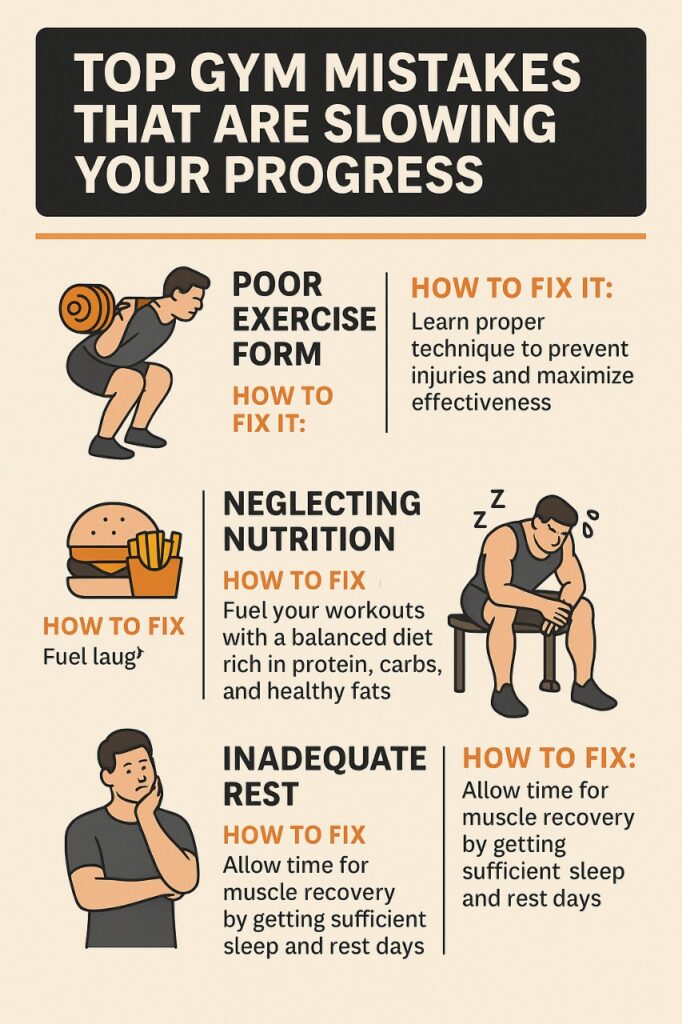
Without proper rest and nutrition, progressive overload leads to overtraining, not progress.
• Protein intake: 1.6-2.2 g/kg of body weight supports muscle repair (American Journal of Clinical Nutrition, 2018).
• Sleep: Growth hormone peaks during deep sleep – 7-9 hours nightly is non-negotiable.
• Active recovery: Light movement (yoga, walking, mobility work) enhances blood flow and nutrient delivery to muscles.
How to Apply Progressive Overload Safely
1. Increase load or volume by 5-10% per week at most.
2. Track your workouts – progress isn’t real if it’s not measurable.
3. Prioritize form before intensity to prevent injury.
4. Eat enough – muscle can’t grow in a calorie deficit for long.
5. Include reload weeks every 6-8 weeks to reset the body
The Takeaway: Science Meets Consistency
Progressive overload is not a fitness trend – it’s a biological law.
Your muscles, bones, and mind thrive on challenge – but only when that challenge grows slowly and purposefully.
In summary:
• Small, steady increases = long-term transformation
• Muscle growth thrives on consistency and variety
• Rest and nutrition complete the process
As sports scientist Brad Schoenfeld concluded in his seminal 2016 paper, “Muscle hypertrophy results from the interplay between mechanical tension, metabolic stress, and progressive resistance.”
So next time you train, remember – you don’t need to be perfect. You just need to be 1% stronger than last week.
I look forward to seeing how these developments will improve service levels and customer satisfaction in the freight industry!