
When it comes to fitness transformations – whether fat loss, muscle gain, or maintenance – the secret isn’t just how much you eat, but what you eat. This is where macronutrients, or “macros,” come in.
Tracking macros helps you understand exactly how much protein, carbohydrates, and fats your body needs to reach your goal efficiently – and sustainably.
Let’s break down the science, step by step
Macronutrients are nutrients your body requires in large amounts for energy, recovery, and cellular
function:
• Protein → Builds and repairs muscle tissue.
• Carbohydrates → Primary energy source for your brain and muscles.
• Fats → Regulate hormones, support brain function, and aid nutrient absorption.
Scientific Insight:
A study in the Journal of the International Society of Sports Nutrition (2017) emphasized that optimal macronutrient distribution – not just total calorie intake – significantly impacts body composition, metabolism, and performance.
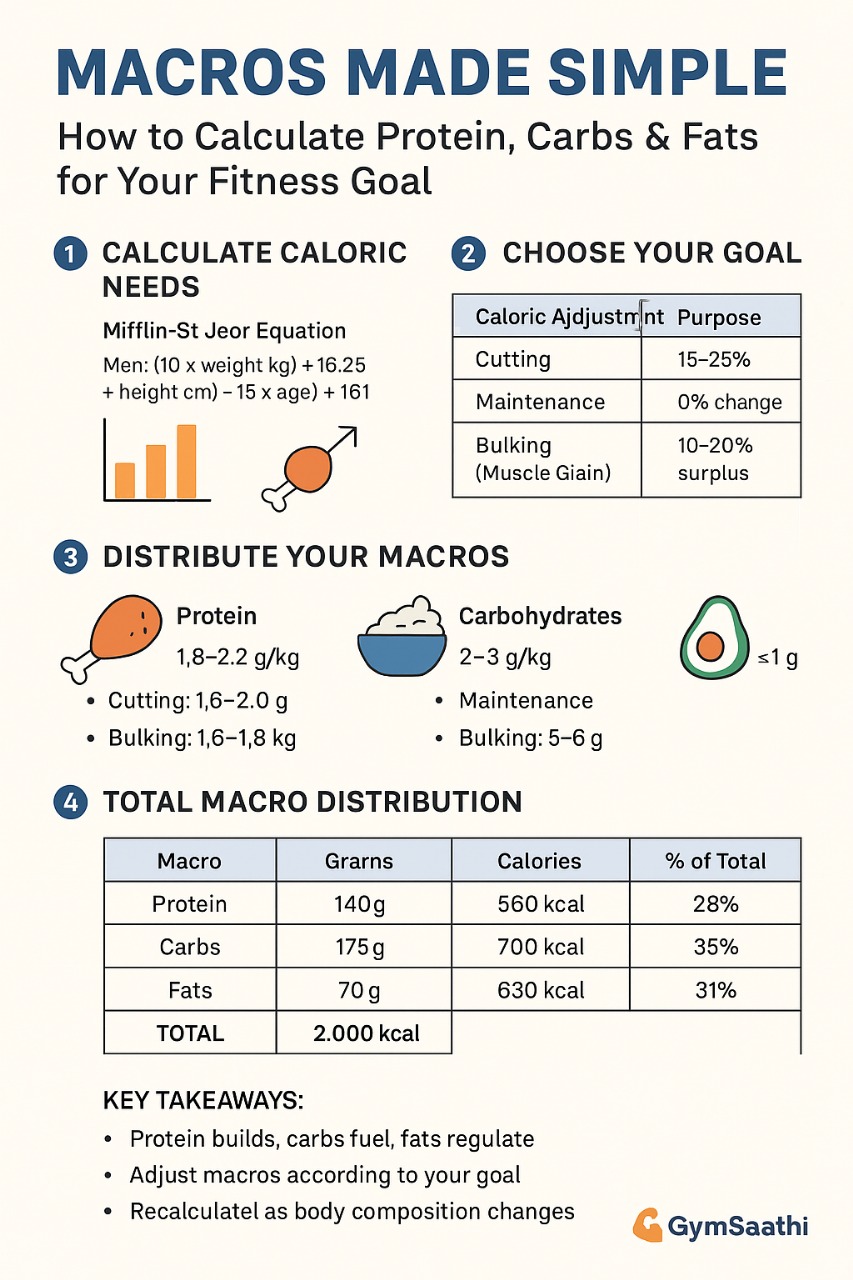
Step 1: Calculate Your Caloric Needs
Every macro calculation begins with your Total Daily Energy Expenditure (TDEE) – the number of calories your body burns in a day.
You can estimate it using the Mifflin-St Jeor Equation, widely validated for accuracy.
Men: (10 × weight in kg) + (6.25 × height in cm) – (5 × age) + 5
Women: (10 × weight in kg) + (6.25 × height in cm) – (5 × age) – 161
Then, multiply the result by your activity level:
| Activity Level | Multiplier |
|---|---|
| Sedentary | ×1.2 |
| Lightly Active (2–3 workouts/week) | ×1.375 |
| Moderately Active (4–5 workouts/week) | ×1.55 |
| Very Active (6+ workouts/week) | ×1.725 |
Example:
A 28-year-old male, 70 kg, 175 cm tall, moderately active:
• BMR = (10×70) + (6.25×175) – (5×28) + 5 = 1,685 kcal
• TDEE = 1,685 × 1.55 = 2,612 kcal/day
That’s your maintenance calorie intake – the baseline where your weight stays stable.
Step 2: Choose Your Goa
| Goal | Caloric Adjustment | Purpose |
|---|---|---|
| Cutting (Fat Loss) | 15–25% deficit | Burn fat while retaining muscle |
| Maintenance | 0% change | Maintain current physique |
| Bulking (Muscle Gain) | 10–20% surplus | Build lean muscle mass |
Example (from above):
• Maintenance: 2,600 kcal
• Cutting: 2,600 – 20% = 2,080 kcal/day
• Bulking: 2,600 + 15% = 2,990 kcal/day
Scientific Backing:
The American Journal of Clinical Nutrition (2018) found that a moderate 20% calorie deficit preserves more muscle mass during fat loss than aggressive deficits.
Step 3: Distribute Your Macros
Let’s calculate your Protein, Carbs, and Fats based on your fitness goal.
Protein – The Builder
• Supports muscle growth, repair, and satiety.
• Recommended intake:
o Fat Loss: 1.8-2.2 g per kg body weight
o Maintenance: 1.6-2.0 g/kg
o Muscle Gain: 1.6-1.8 g/kg
Research Insight:
A meta-analysis in Nutrients (2020) confirmed that ≥1.6 g/kg/day protein intake maximises muscle protein synthesis during training.
Example (70 kg male):
Protein = 70 × 2 = 140 g protein/day (560 kcal)
Carbohydrates – The Fuel
• Your body’s preferred energy source, especially for high-intensity workouts.
• Supports recovery by replenishing muscle glycogen.
Recommended intake:
• Fat Loss: 2-3 g/kg
• Maintenance: 3-5 g/kg
• Bulking: 5-6 g/kg
Study Reference:
The European Journal of Sport Science (2019) found that adequate carb intake enhances exercise performance and recovery, especially when consumed around workouts.
Example (70 kg male, cutting):
Carbs = 70 × 2.5 = 175 g/day (700 kcal)
Fats – The Hormone Regulator
• Essential for testosterone, estrogen, and vitamin absorption (A, D, E, K).
• Recommended intake: 0.8-1.2 g/kg body weight.
Journal of Applied Physiology (2021) reported that diets too low in fat (<15% total calories) can negatively affect hormonal balance and metabolism.
Example (70 kg male):
Fats = 70 × 1 = 70 g/day (630 kcal)
Step 4: Total Macro Distribution
Now, let’s add it all up (for fat loss target 2,000 kcal/day):
| Macro | Grams | Calories | % of Total |
|---|---|---|---|
| Protein | 140g | 560 kcal | 28% |
| Carbs | 175g | 700 kcal | 35% |
| Fats | 70g | 630 kcal | 31% |
| Total | - | 1,890 kcal | ~100% |
Step 5: Adjust, Track, and Evolve
Your body changes, so should your macros.
• Track progress weekly: body weight, energy, mood, performance.
• If weight loss stalls for >2 weeks, reduce 150–200 kcal/day (usually from carbs or fats).
• For muscle gain, increase 150–250 kcal/day.
Scientific Support:
A long-term study in Sports Medicine (2021) found that periodized nutrition – adjusting macros every few weeks – leads to better performance and body composition outcomes.
Step 6: Real-Life Food Examples
| Food | Protein (g) | Carbs (g) | Fat (g) | Calories |
|---|---|---|---|---|
| 6 Eggs | 36 | 3 | 27 | 420 |
| 100g Paneer | 18 | 4 | 20 | 260 |
| 300g Cooked Rice | 9 | 86 | 1 | 390 |
| 100g Toor Dal | 22 | 57 | 3 | 350 |
| 1 Tbsp Ghee | 0 | 0 | 14 | 126 |
| 30g Almonds | 6 | 6 | 15 | 174 |
Research Reference:
An Indian nutrition review (International Journal of Food Sciences and Nutrition, 2022) highlights dal, paneer, and eggs as cost-effective protein sources that rival imported supplements in musclebuilding efficiency.
Key Takeaways
• Protein build, carbs fuel, fats regulate.
• Start with your TDEE, then adjust for your goal.
• Consistency beats perfection – hit your macros 80-90% of the time.
• Recalculate every 4-6 weeks as your body composition changes.
Final Scientific Note:
The International Journal of Sports Nutrition (2023) reaffirmed that balanced macro intake customized to individual goals delivers superior fat loss and muscle retention compared to calorie counting alone.
The GymSaathi Edge
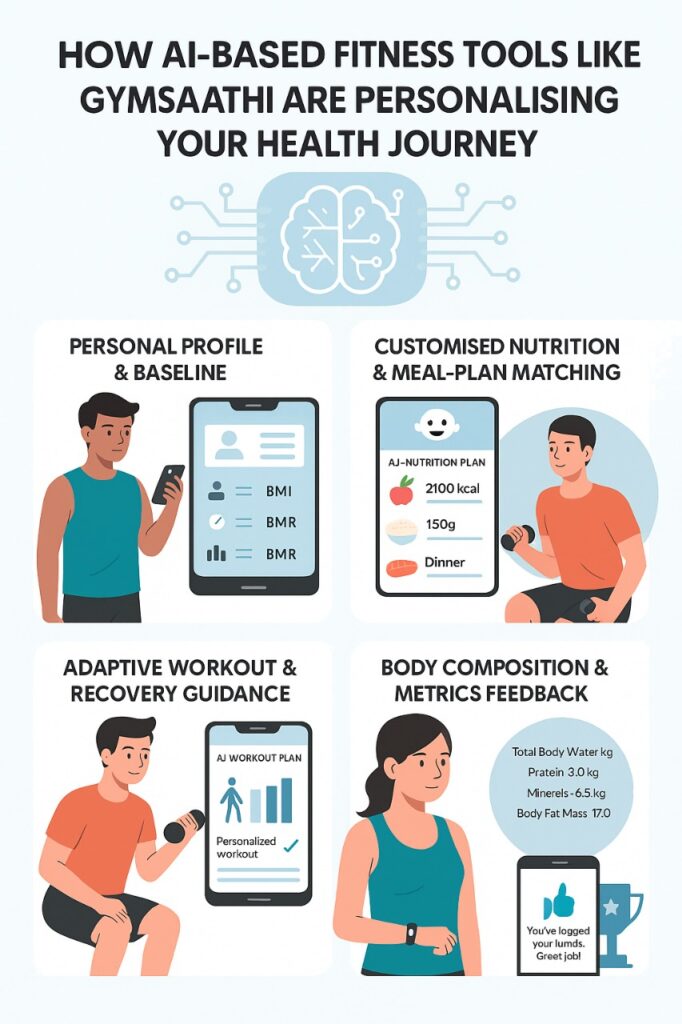
With GymSaathi’s AI-powered Nutrition Planner, you don’t have to crunch numbers.
It automatically:
Calculates your BMI, BMR, and TDEE
• Suggests custom macros for your goal
• Generates 7-day meal plans with quantified Indian foods
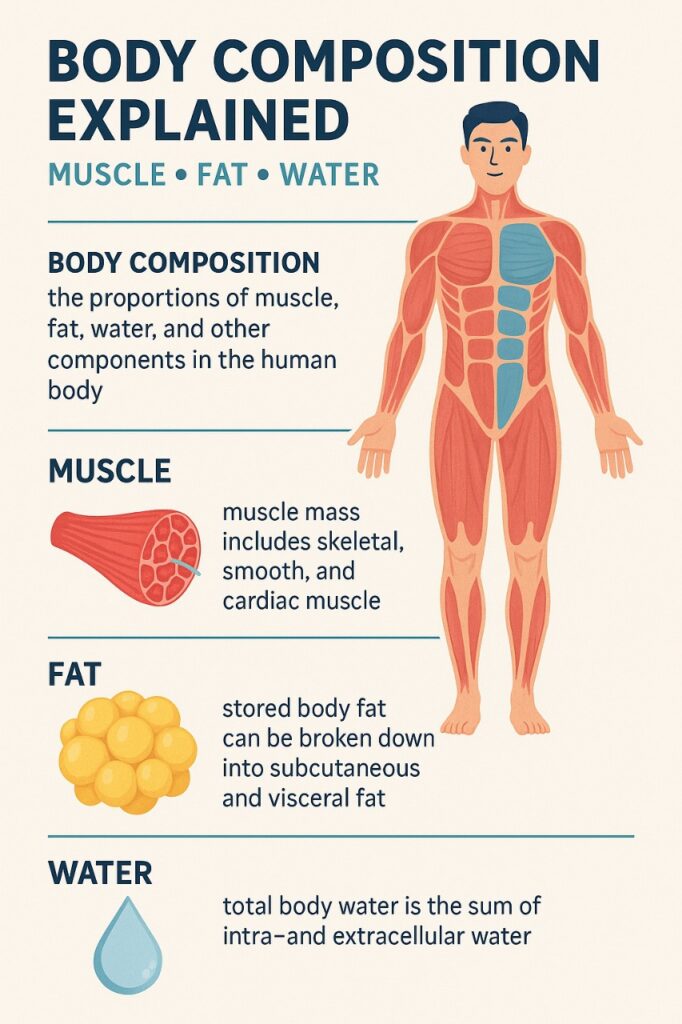
• Tracks progress in calories, macros, and body composition
Your personalized nutrition plan – made simple, scientific, and sustainable.
I look forward to seeing how these developments will improve service levels and customer satisfaction in the freight industry!